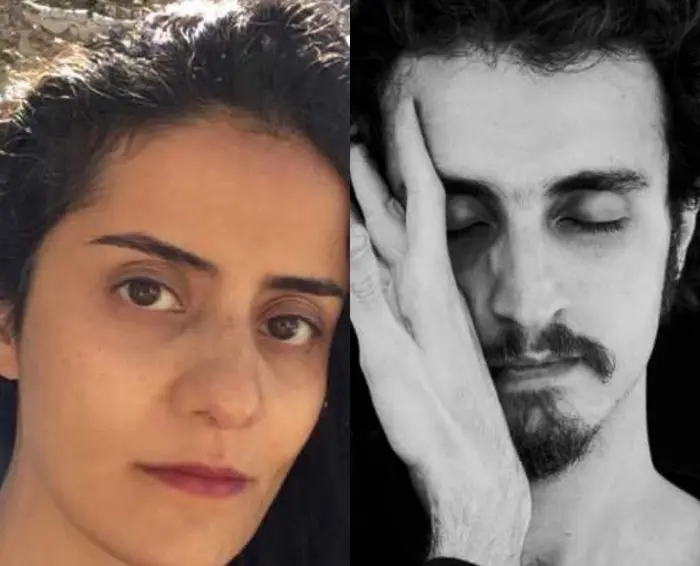
Alireza Mirmohammadi and collaborator Maryam Ghiasi
Choreographer & Dancer
Project: Mourning
Alireza Mirmohammadi is an Iranian dancer, choreographer, and director. He holds a bachelor’s degree in drama from Tehran University of Art. He worked with other Iranian artists, such as the director Mehdi Faradjpour from 2005 to 2009, and choreographer Atefeh Tehrani for her dance/theatre project Read. He participated in other collective projects before creating his own dance/theatre project Faust in 2011. In 2016, he created Nature Exploration, a dance film. He collaborated with Maryam Ghiasi as a director advisor for two short films: The Home which I Loved in 2017 and Stain in 2018.
From 2017 onwards, he has been working with Bára Sigfusdóttir, an Icelandic/Belgian based choreographer, for her very last art piece Being. In 2017, Mirmohammadi founded PAC (Iranian Performing Arts Community) to create a community of dancers that now counts 300 members. He also worked as a partner for the organization of IETM (International Network for Contemporary Performing Arts) caravan meeting in Tehran. Recently, he has been working on his own new solo project Mourning as dancer and choreographer, for which he was in residency at Workspacebrussels in January 2019. He was in residency at PACT Zollverein (Germany) in February 2019.
Maryam Ghiasi is an Iranian filmmaker, scriptwriter, and visual artist. She has created two short films as the scriptwriter and director. The Home Which I Loved and Stain were both selected by international film festivals. Maryam has been in collaboration with Houman Tehrani Sharif as the director’s advisor in his short animation, Shadows, from 2020. In 2021, she worked with Alireza Mirmohammadi in his dance Project Lullaby as the visual artist (performer). Lullaby will have its Belgian premiere at Charleroi Danse in March 2024.
The experience of mourning that Alireza Mirmohammadi faced two years ago led him to work on a new choreographic work based on this experience. As a young man living in a society with a constant conflict between tradition and modernity, he has always run away from traditional and religious rites. However, losing someone and subsequently turning to these rituals offered him an opportunity to know more about them. His project is inspired by ancient Iranian traditions reinterpreted in his own personal style.
Although mourning is a universal ordeal, the way it is expressed varies from place to place and is influenced by local cultures. These differences triggered him to perform his solo for audiences who are completely unfamiliar with his own rituals. This allowed him to receive the audience’s pure feedback because, in his opinion, people from all over the world have a common invisible language which brings them together despite their differences. This language is nothing but our emotions. This project is his own way to confirm or deny this idea.