


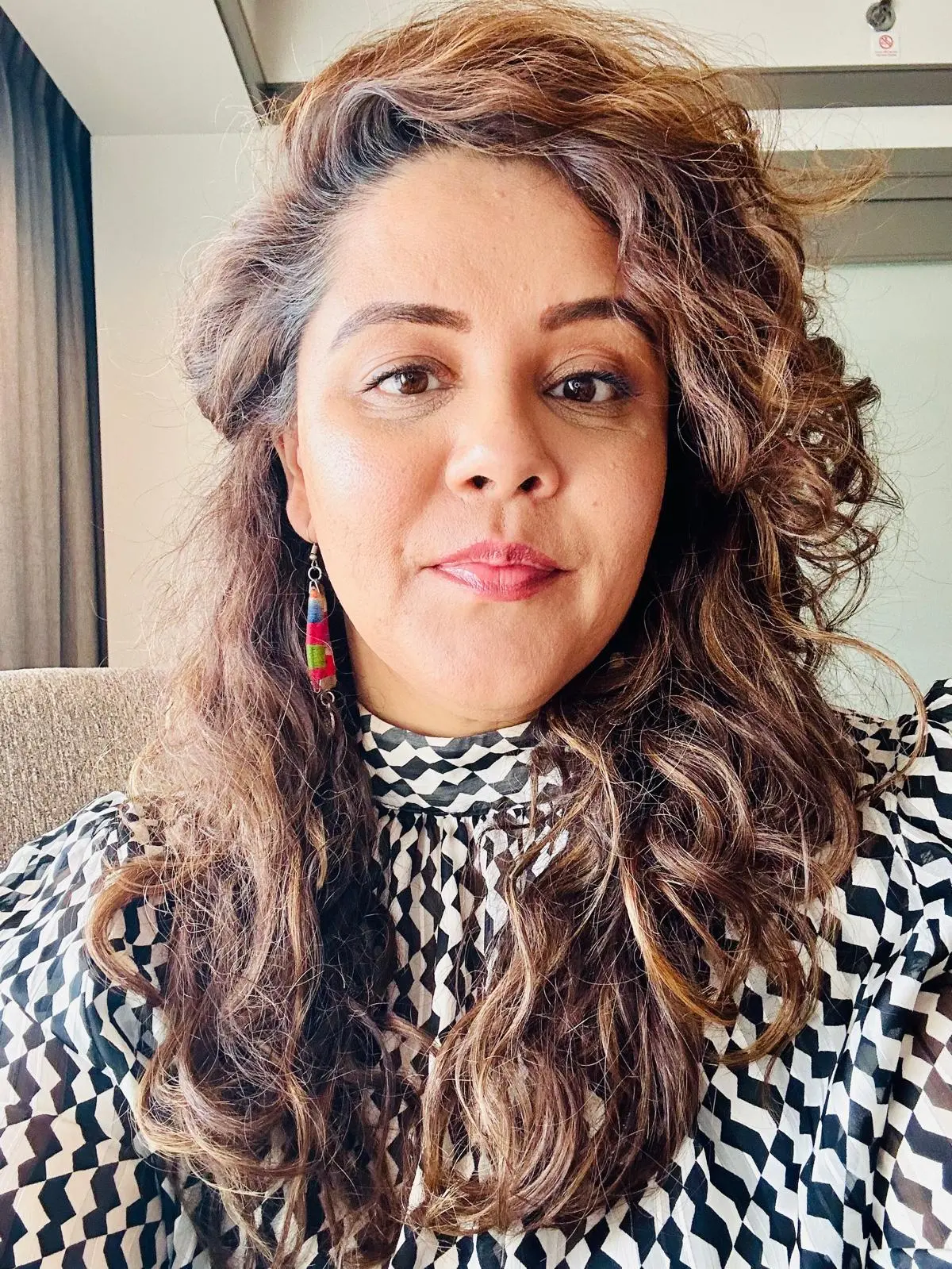
Chandni Desnai
Assistant Professor
Project: Revolutionary Circuits of Liberation: The Radical Tradition of Palestinian Resistance Culture and Internationalism
Biography
Chandni Desai is an Assistant Professor at the University of Toronto. Desai’s writings have appeared in the Journal of Palestine Studies; Race and Class; Curriculum Inquiry; Decolonization: Indigeneity, Education and Society, The Conversation, and several anthologies. She is working on her first book tentatively titled Revolutionary Circuits of Liberation: The Radical Tradition of Palestinian Resistance Culture and Internationalism. Her research focuses on the radical tradition of Palestinian resistance culture, specifically the cultural institutions, archives and radical arts practices established by Palestinian revolutionaries in the PLO. She maps the circulation of resistance culture across geographies in the 20th and 21st century; unearths the legacy of anti-colonial and internationalist cultural production, thought, consciousness and praxis and the making of internationalism against settler colonial dispossession, imperialism, warfare and genocide. Desai is the host of the Liberation Pedagogy Podcast.
Project: Revolutionary Circuits of Liberation: The Radical Tradition of Palestinian Resistance Culture and Internationalism
Revolutionary Circuits of Liberation tells the story of the expansive radical tradition of Palestinian resistance culture produced during the period of the Palestinian revolution (1964-1982) and its afterlife. It will tell the story of the cultural institutions, radical arts practices, anti-colonial archives, and cultural networks that were established by and with the PLO that were based in Jordan and Lebanon from the 1960’s-1980’s. It not only shows how Palestinian cultural producers rewrote Palestine back into existence after the Nakba, but it argues that Palestinian revolutionary cultural producers played a significant role in the making of various forms of internationalism alongside other revolutionaries from across the four continents of Africa, Asia, Latin America and Europe, which resulted in principled solidarity and support for the Palestinian struggle and revolution. Analyzing the global political economy and the social relations of capitalist imperialist accumulation during the 1960s-1990s, the Zionist state of Israel was conceptualized by the Afro-Asian Left as an imperialist base in Africa and Asia. The book shows how this necessitated the making of various forms of internationalism to unite revolutionaries in a world revolution during the height of Third World Decolonization and the Cold War. The book draws from oral history interviews conducted with Palestinian revolutionary cultural producers that were involved with the Palestinian Liberation Organization (PLO), anti-colonial archives, and cultural artifacts.