


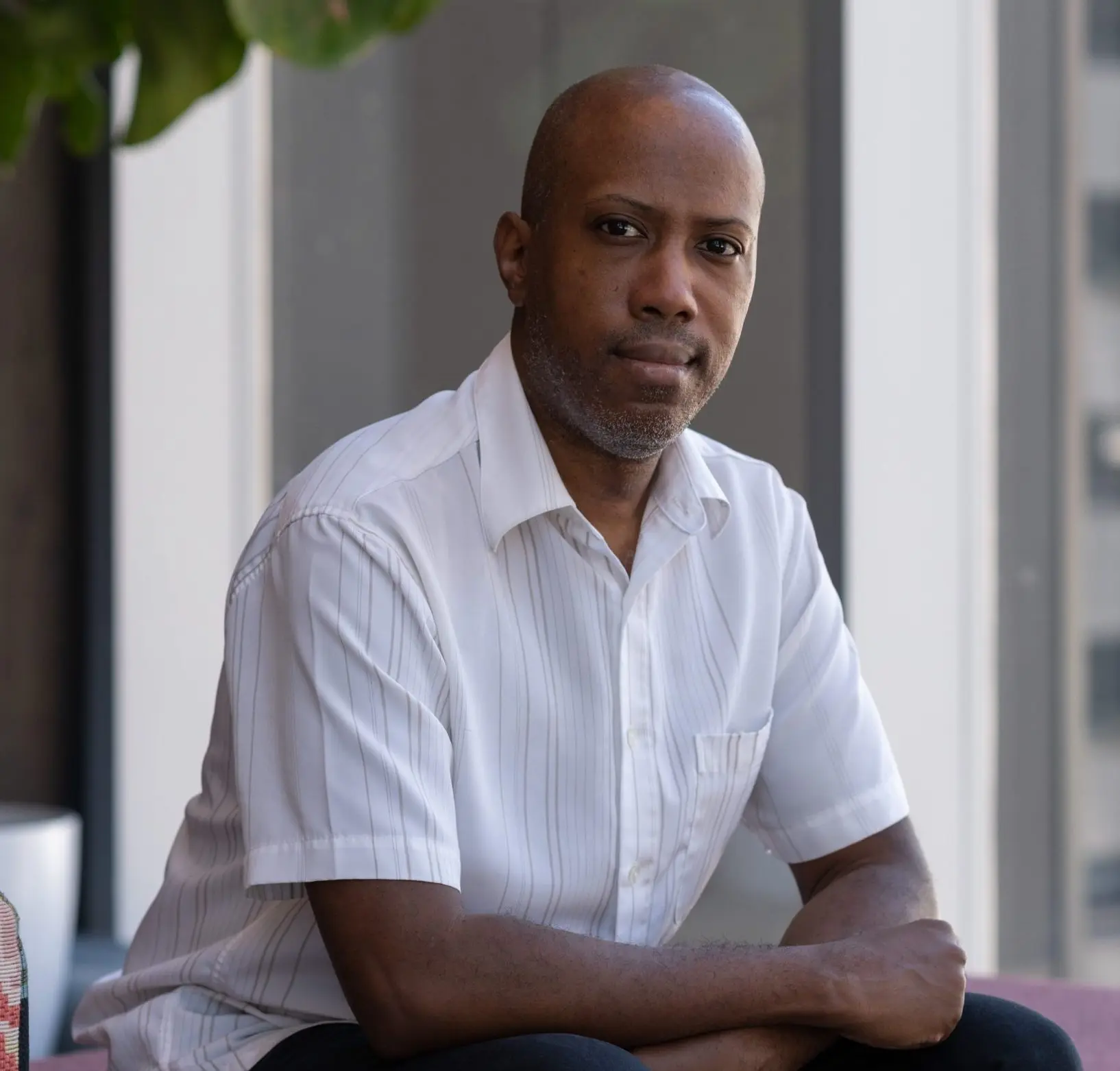
Norman Long
Artist and teacher
Biography
Norman Long is a recipient of the 3Arts Award in 2011, the 3Arts Djerassi Artists Residency Fellowship in 2014, and the BOLT Artist in Residence at the Chicago Artists Coalition in 2014-2015. He was also honored with the 3Arts Fellowship at AS220's Artist in Residence program in Providence, RI, in 2017, as well as the ThreeWalls RaD Lab Fellowship for 2017-2018. His role as Guest Composer at EMS Elektronmusikstudion in Stockholm, Sweden, was made feasible, in part, by the City of Chicago's DCASE grant.
In the current year, Norman's multi-channel sound installations have been exhibited at the Glass Curtain Gallery and the Ford Environmental Community Center in Chicago, IL, with generous support from Columbia College Chicago and ThreeWalls Gallery. Additionally, he has released two albums, "Calumet in Dub" (on Blorpus Editions) and "Re-membering Re-Presencing" (on Rural Situationism).
Project: Embodied Transmissions
Norman W. Long intends to implement a succession of iterations of his sonic experiential compilation during his residence at Camargo, wherein he will investigate the auditory-visual essence of the local community through recording, editing, and processing the sonic constituents of said compositions. Long’s inquiries into analog/ digital synthesis and sampling will also be incorporated, where disparate voices coalesce, contest, and fortify elements inherent in the recorded auditory landscape. The novel environs and opportunities present intrinsic challenges in the domains of labor, recording, exploration, presentation, and composition. Norman’s approach to navigating these challenges will integrate into the procedural framework and manifest in the final compositional output. Each locale thus evolves into a distinct contextual framework for his artistic praxis.