fr en
Horizons

Horizons

About every two years, the Horizons residencies invite scholars, thinkers and artists with complementary practices and knowledge to come together to work on specific themes related to our way of inhabiting the world. Each edition is an opportunity to forge collaborations and initiate exchanges between residents whose research work intersects and informs one another.

Mondes Marins

In The Sea Around Us (1964), marine biologist and environmental activist Rachel Carson recounts that the moon may have been born from a wave of terrestrial matter propelled into space. This chance event would have carved out the contours of the ocean basins and continents we know today. She also reminds us that protoplasm, the substance at the origin of life on Earth, emerged from masses of salty, semi-dark water billions of years ago.


It is in deep time that the oceans tell their stories. By turning our gaze toward the ground and questioning the rocks, it is possible to read the movement of oceans now long gone. Throughout all time, water has absorbed, dissolved and metabolised both inert and becoming matter. From the abyss to the surface, from the open sea to the shores, the deltas and the mountain springs, its currents carry histories that shape the living world.


The oceans make up 97% of the habitable spaces on Earth and produce more than 50% of the oxygen in the atmosphere. Yet they are experiencing the effects of climate disruption five times faster than any other environment. The ocean is not a hermetic liquid entity sealed off from the rest of the world: it operates in deep interdependence with its environment, near and far. Its movement does not stop at the shoreline. The fluidity inherent to it, resisting all forms of territorialisation, requires that it be considered in its continuity with non-aquatic ecosystems. Marshes, mangroves, moorlands and other wetlands are fragile yet powerful spaces that ensure continuity between sea and land. The microbial communities they shelter are both fragile and powerful: capable of mitigating soil erosion and absorbing carbon dioxide, they protect the habitats of numerous species. To the rhythm of the tides, successively submerged and emerged, they create and sustain wo


Created by and for artists, practitioners, sea-users, civil society actors, and researchers, Mondes Marins is a 3 month-long residency program hosted by the Camargo Foundation, that approaches contemporary representations of oceans and the knowledge making processes that shape them. Curators, researchers, and artists will be invited to come to the Camargo Foundation and engage with the program's residents.


In Spring 2025, 30 scholars, researchers, artists and curators were approached and asked to nominate artists. As a result, 80 artists were invited to apply, with a wide range of practices and perspectives. In July 2025, a jury was gathered, bringing together environmental scientists, curators and artistic directors to select 5 laureates.


We are thrilled to announce this selection, and to introduce the 5 artistes who will take part in Mondes Marins to you. A series of highlights open to the public will punctuate this residency throughout 2026, which can be found in the Agenda section. 


Developed since 2021, Mondes Marins is launched in 2025 thanks to the support of the Daniel & Nina Carasso Foundation, the Saison Méditerranée 2026, partnerships with the Calanques natio- nal Park, l’Institut Pythéas - Observatoire de l’Univers and L’Art Rue in Tunis.


The 2026 Mediterranean Season highlights the richness and diversity of Mediterranean cultures. It celebrates artists, creators, and young talents from the region, promoting cultural and human exchanges.

Following a popular and festive opening in Marseille, the Mediterranean Season will take place mainly in France, across the entire territory, from May 15 to October 31, 2026. It will also extend across the Mediterranean shores through various events connected to the region’s artistic scenes, cultural institutions, and the French diplomatic network abroad.

This Season is an opportunity to showcase youth and diaspora initiatives, support creation and innovation through the circulation of ideas and people, and encourage cooperation between civil societies, particularly with Morocco, Algeria, Tunisia, Egypt, and Lebanon.

The Season focuses on five themes addressing contemporary issues collectively: speculative utopias, plural identities, contemporary spiritualities, the collective history of migration, and the construction of narratives.

Under the aegis of the Ministry for Europe and Foreign Affairs and the Ministry of Culture, in connection with the Interministerial Directorate for the Mediterranean, this Season is coordinated by the Institut Français under the general commissionership of Julie Kretzschmar.


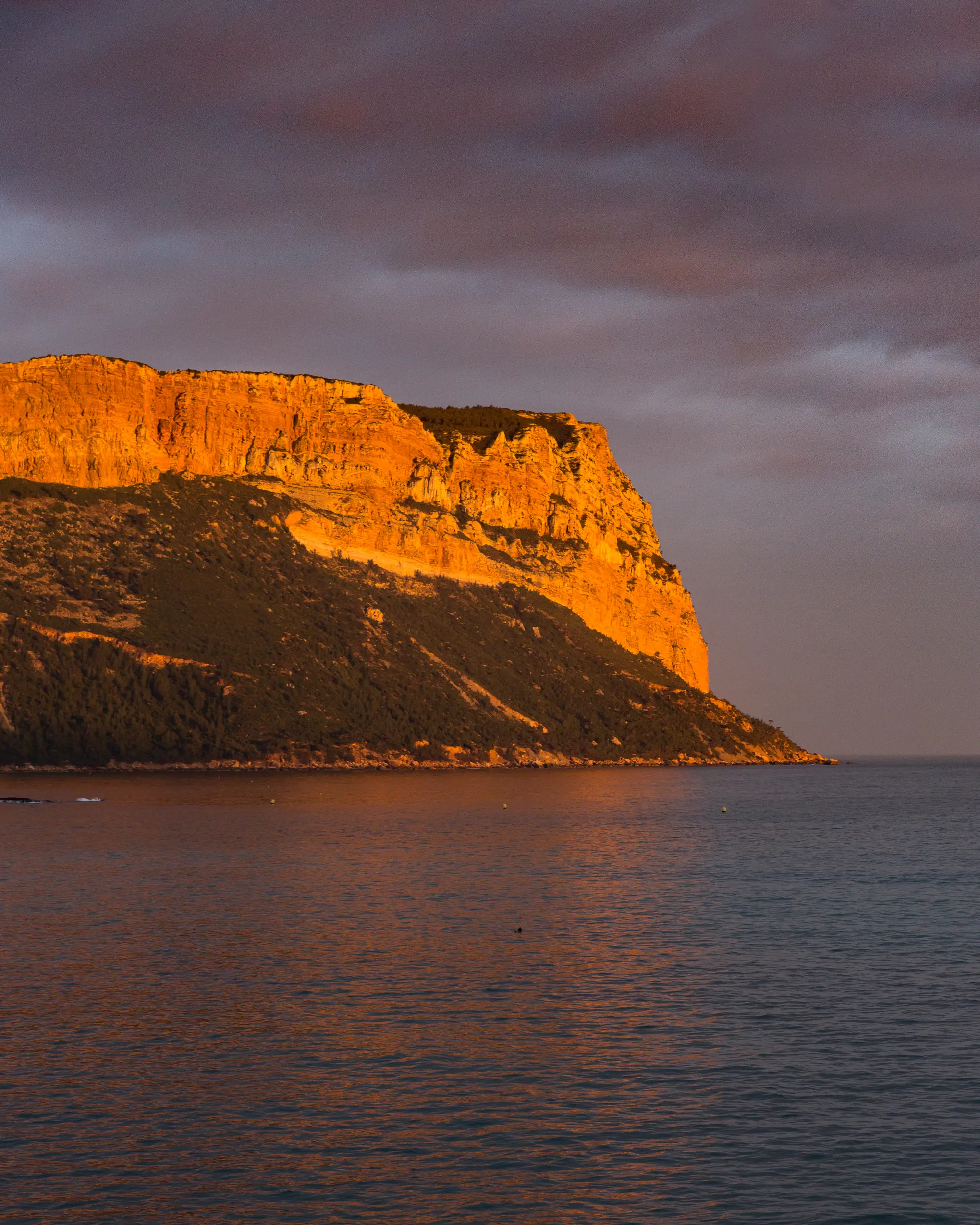
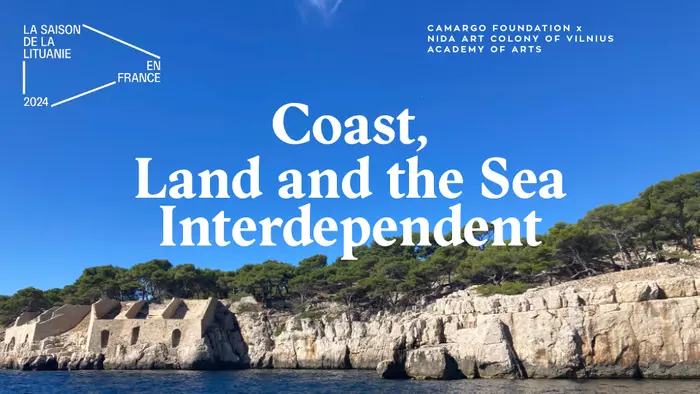
Coast, Land and the Sea Interdependent

Since 2024


As part of the Season of Lithuania in France 2024, the Camargo Foundation and Nida Art Colony of Vilnius Academy of Arts (NAC) are collaborating on a cross-sectoral research residency programme that focuses on human-built environments and brings together two coastal locations: the post-industrial Calanques and the cultural landscape of the Curonian Spit. 


At the interface of sea and land, at the northern and southern edges of Europe, on the shores of the Mediterranean and Baltic seas, the Camargo Foundation and NAC operate as art residency spaces. They welcome artists, researchers and thinkers year-round, and are dedicated to fostering research, process-based, transdisciplinary practices and encouraging exchanges through collaborative projects that explore the intersections of art, research and culture.  


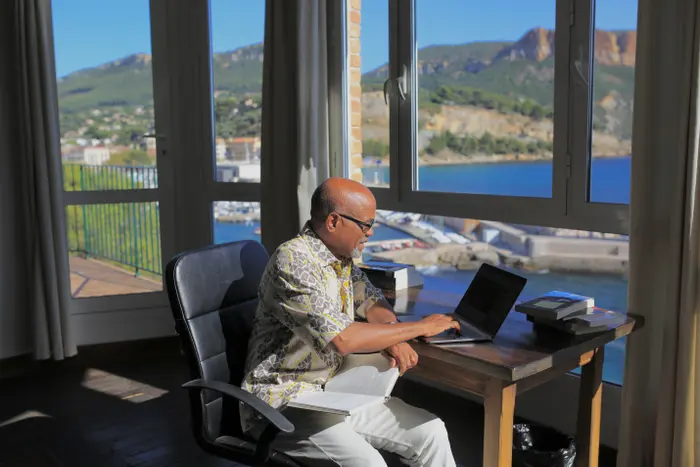
Over the course of 10 weeks, the Camargo Foundation is hosting: architect and researcher, Indrė Umbrasaitė; writer, poet, and dramaturg, Vaiva Grainytė; and artist researcher and PhD candidate at Vilnius Academy of Arts, Simona Rukuižaitė. In exchange and conversation with fellow residents, the Calanques National Park, and the Institut national supérieur d’enseignement artistique Marseille-Méditerranée – INSEAMM, they follow their research and work inquiries, observing the myriad of transformations affecting coastal environments.


Coast, Land & the Sea Interdependent focuses on marine and coastal protected areas managed by the Calanques National Park and the impact that the management of terrestrial landscapes has on marine life and biodiversity. Like the cultural landscape of the Curonian Spit, where forests were planted 200 years ago to serve as infrastructure, the marine environments of national parks can also be seen as cultural landscapes, shaped by decisions taken from the land, by humans. In 2022, the Calanques National Park delivered France’s first seascape plan, a valuable tool to help develop strategies and actions to support the regulatory processes that have an impact on the protected seascapes.


Cultural Diaspora Program

2018 & 2022


The Cultural Diaspora residency was conceived by acclaimed African-American playwright Carlyle Brown and the Camargo Foundation to support accomplished Black playwrights with diverse cultural backgrounds, and to spark a dialogue about the disparate ways in which the African Diaspora experience has shaped their perspectives and creative output.


Led by co-curators Brown and Nigeria's celebrated theater director Chuck Mike, eight accomplished Black playwrights—four from Africa and four from the United States—convened at the Camargo Foundation in Cassis in the South of France in June 2018 to take part in the pilot edition of the Cultural Diaspora playwrights’ residency. As expressed by Brown, “The idea for the residency was to bring together African and African-American text-based theater artists from opposite ends of the Africanist Diaspora to share work, ideas and strategies for surviving as Black artists, without the veil of a white/western filter, without having to explain themselves, without having to represent an entire group of people, but to explore their craft, their voice, and their African-ness in a beautiful, safe, supportive environment with likeminded individuals who express an interest in the African Diaspora as an influence on and factor in their craft, the content they create, their thinking, and world view.”


The second edition of the Cultural Diaspora residency took place in May-June 2022. Building on the experience gained with the first iteration of the program, the duration of the residency has been extended from four to five weeks, and the international open call has expanded to include Black text-based theater artists from throughout the African Diaspora, including countries bordering the Atlantic basin, Africa, the Americas, the Caribbean, and Europe as well as Black text-based theater artists outside of those boundaries whose work reflects an interest in the African Diaspora and Afro-Atlantic culture.


Calanques Program

2018


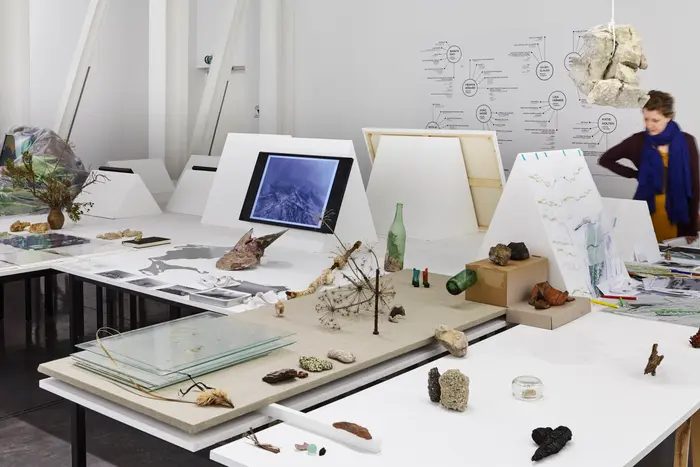
In January 2018, the Calanques National Park, OSU Pythéas Institute (Aix-Marseille University, CNRS, IRD) and the Camargo Foundation—together with landscape architect Gilles Clément—invited eight international artists to reflect upon the human/nature relationship within the context of the only urban national park in Europe. During five weeks, eight unique visions were inspired by exchanges with the territory and those that live and work within it: researchers, park officers, and the inhabitants of the area.

Each artist, through the help of local specialists, explored different topics, such as the universe of jellyfish (Shanta Rao); our relationship to plants and the knowledge that we have of them (Lisa Hirmer); underwater landscapes and how these can be revealed (Nicolas Floc’h); the multiple borders of the National Park (urban, maritime, roads and pathways…) (Franck Gérard); the way in which the cracks and marks within the rocks form a language (Katie Holten); how traces of our everyday existence can become an archaeology (João Modé); the use of scientific equipment to study the exchanges between a tree and its environment (Julien Clauss); receiving the public and how this can influence the integration of nature into an urban setting, and the possibilities of architectural creativity with creating a space that will evolve through multiple uses and biodiversity protection (Ryo Abe).

This residency gave rise to the exhibition Calanques, territoire de sciences, source d'inspiration at Frac Sud in 2018. Some of the projects lead during the residency have been continued such as with Ryo Abe and his project Approaches, Nicolas Floc'h with Invisible, and Franck Gérard with Aux Frontières.