 Sivan Eldar's personal website
Sivan Eldar & Ganavya Doraiswamy
Composer & Vocalist and musician
Biographies
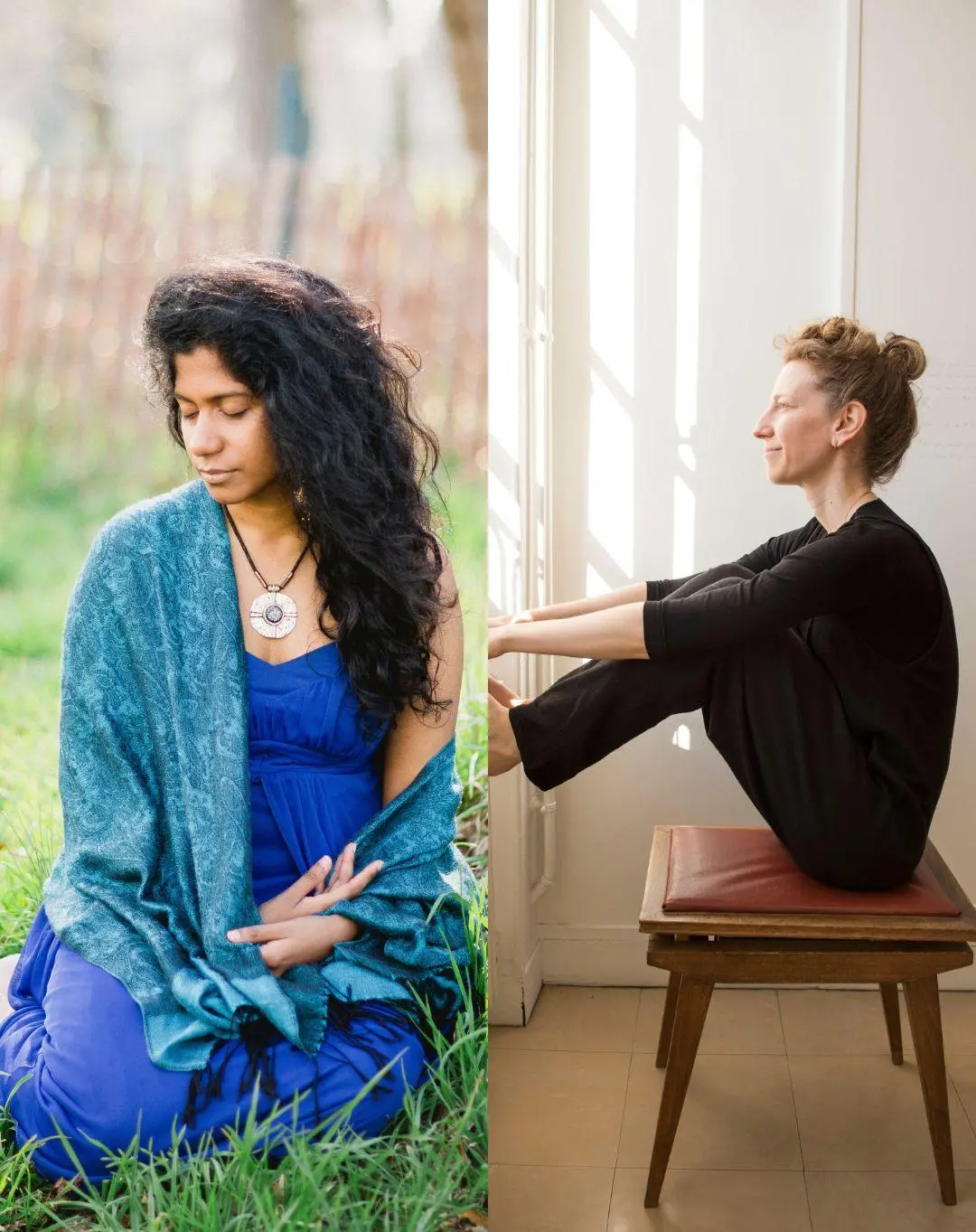
Composer Sivan Eldar's music has been described as “resolutely of our time” (Opera Forum), “of a singularitýremarkable” (ResMusica), “meditative and captivating” (l'Humanité́), “with a sensitivitýunique to the dramaturgy” (Diapason), ‘A form of trance’ (Ôlyrix), ‘rutile with hybrid modernity’ (Les Inrockuptibles), ‘imagined with great virtuosity’ (The Boston Globe) and ‘luxurious and exhilarating’ (SF Classical Voice). Recent creations include the opera Like Flesh with writer Cordelia Lynn (Opéras de Lille, Montpellier, Lorraine, Anvers), After Arethusa and The stone the tree the well with the accentus choir and Latvian Radio Choir (Venice Biennale, Auditorium du Louvre, La Seine Musicale), Una Mujer Derramada with soloist Amyra León (Théâtre du Châtelet, Le Corum : Opéra Berlioz), Heave with soloist Juliet Fraser (Centre Pompidou, Opéra de Marseille, November Musique) and Solicitations with the Diotima and Mivos quartets (Luxembourg Philharmonie, Ultraschall Berlin, Festival Présences, Wien Modern). Recent honors include the Prix de Rome-Villa Médicis 2022-23, the Prix Nouveau Talent Musique-SACD 2023, the Prix Fedora Opéra 2021, and residencies at the Villa Albertine, the MacDowell, the Cité Internationale des Arts, and the Camargo, Civitella Ranieri, Royaumont and Fulbright foundations. She has also been composer-in-residence at Opéra de Montpellier (2019-22) and IRCAM (2020-23). She is currently working on two new operas: Le Cerf aux neuf joyaux for the Festival d'Aix-en-Provence in 2025 and Le Palais de glace with her collaborator Cordelia Lynn for the Grand Théâtre de Genève in 2028. Two portrait CDs are scheduled for 2025 and 2027 on the B-records and naïve labels. His music is published by Durand-Universal Music Classical.
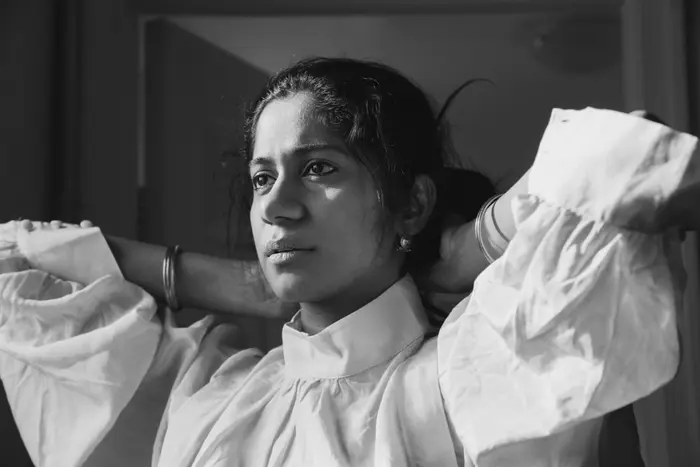
With a voice described as “achingly emotional” (JazzTimes), “extraordinary” (DownBeat), and “haunting” (All About Jazz), vocalist, intellectual and multi-instrumentalist Ganavya Doraiswamy lives, learns and loves within very different worlds and in great freedom. Recent works include her participation as solo vocalist in the Grammy Award-winning Songwrights Apothecary Lab (2021); the direction of a spiritual gathering in honor of Swami Alice Coltrane Turiyasangitananda, entitled Daughter of a Temple, with, among others, Esperanza Spalding, Shabaka Hutchings, Immanuel Wilkins, Chris Sholar (2022); participation as solo vocalist and composer in the film This Body is So Impermanent. . directed by Peter Sellars (2021); participation in composition, dance and solo voice for Chapter 7: The Goddess directed́by Peter Sellars; and, finally, the Jerome Foundation commission Let's Go Out and Play (2021). Ganavya holds degrees in performance (Berklee College of Music), ethnomusicology (UCLA), creative practice and critical inquiry (Harvard). She has recently been awarded grants from the following organizations: Civitella Ranieri in Umbertide (Italy), the Camargo Foundation in Cassis (France) and the Cynthia Mitchell Center for the Arts in Houston (USA). Recent written works include Shards of Ether in John Zorn's Arcana series, On the Form Behind Form in the Journal for Mutual Mentorship for Musicians, and a contribution to the libretto of the opera Iphigenia by Wayne Shorter and Esperanza Spalding.
Project: Nine Jewelled Deer
Drawing its inspiration from three sources - that of the Jātaka tales with the poem of The Stag with the Nine Jewels; that of the singular life of South Indian musician Seetha Doraiswamy; and finally that of the Vimalakîrti Sûtra, an age-old tale of Buddhist literature - this opera offers a new and exciting variation on the theme of the human quest for freedom. It encourages us to pay attention to those voices freed from the grip of power that we have learned to ignore, to the whispers that offer refuge.
PRESENTATION OF THE PROJECT
On the wall of one of China's Mogao caves, a thousand-year-old fresco painted in ink, sheltered from the sun, has survived the passage of time. In it, a man is drowning. He begs a marvellous creature, a stag spotted with nine jewels, to save him. She agrees on one condition: the man must not reveal the secret of her existence. The promise is betrayed and an army arrives to capture her. The Deer leaps out of the fresco and into a new world, devoid of greed. At the back of a small kitchen - which magically expands to accommodate all those in search of her - a Grandmother makes instruments from old cauldrons and dried seeds. Women and children, often abused and marginalized, gather here to play, tell and sing their secrets together. In this kitchen, they are safe from those who have betrayed them. Grandma listens to them and offers the promise of a better life in return. In the garden of a former prostitute, a monk reveals the secrets of awakening: Open your eyes. Perceive omnipresence - the sun and the moon. Eternal love - for the world. Liberation through equality of all beings.
FORM
This opera echoes an ancient Indian narrative tradition. It combines stories from the past (atītavatthu) and the present (paccupannavatthu). A third atemporal narrative (samodhāna) links them together. The result is polyphonic writing, a veritable metaphor for the liberation of a body that survives the violence it has endured.
MUSICAL UNIVERSE
The opera is written for two solo voices, an instrumental ensemble of five soloists and an electronic device. The sung part, alternating between English and Tamil, features singers Ganavya Doraiswamy and Aruna Sairam alongside an instrumental ensemble whose artistic backgrounds include classical music, jazz and traditional South Indian music. The electronic part is both the background against which the instrumental ensemble unfolds, and the living space that acts as a counterpoint to the musicians' and singers' performance. The score marks the first operatic collaboration between composer Sivan Eldar and singer/improviser Ganavya Doraiswamy, who combine their poetry, vocal timbre and orchestration skills to create a new form of musical narrative. Their first collaboration, a choral work for the accentus, Spirito and Latvian Radio Choirs, premiered in Rouen, Bourges and La Seine Musicale in Paris in April 2024.
TEXT AND SCENOGRAPHY
The interweaving of the three textual sources evolved, like the musical language itself, over the course of the various workshops. In October 2023, author Lauren Groff joined the team for a residency at the Fondation Camargo, focusing on the text. She is contributing to a libretto that has the spiritual power, deep colors, magical lightnesś, transcendence and fragrance that emanate from these three sources. Plastic art is an important element of this composite work. In March 2024, artist Julie Mehretu was invited to shape and create the physical environment for the piece and the performers.
SOURCES AND INSPIRATIONS
(1) The Tale of the Deer with Nine Jewels (Ruru Jātaka):
The Jātaka tales belong tòa large corpus of stories recounting the past lives of Buddha. They originated in India before spreading throughout Asia. Like an immense collective and metaphorical web, these tales undo the illusion of a separation between all things and melt all categories into one: past, present, future; self and other; awakened and unawakened; animal and human. The tale of the Stag with the Nine Jewels, as told on the fresco in the 3rd-century caves at Dunhuang, China, ends with the animal fleeing outside the wall, beyond̀the visible world. This story has countless endings. The opera explores several of them.
(2) Seetha Doraiswamy:
Seetha Doraiswamy was one of the last performers of the jalatarangam (“water waves” - an almost extinct instrument made of porcelain kitchen bowls and water). She is also the founder of the Kitchen Orchestra, an ensemble open to amateurs - often vulnerable, marginalized and not necessarily musically literate - and their handcrafted instruments. Through music and song, Seetha Doraiswamy has transformed their stories into poetic praise. Seetha Doraiswamy's life had a powerful influence on the writing of this opera. Seetha was Ganavya's grandmother.
(3) The Vimalakirti Sutra:
The Vimalakîrti Sutra is a text from Mahāyāna Buddhism, dating from the first century CE. It is often described as one of the first texts affirming gender equalitýand fluiditý. In it, the monk Vimalakirti recounts his conversations with prostitutes, drug dealers and a whole range of people who usually remain on the bangs of young monks' courtship. This is a particularly committed sutra, whose radicalism still resonates today. The opera focuses primarily on chapter 1 of the sutra: The Purification of the Buddha-Field, in Robert Thurman's English translation.