Zora Snake & Julie Peghini
Artist performer & anthropologist
Biographie
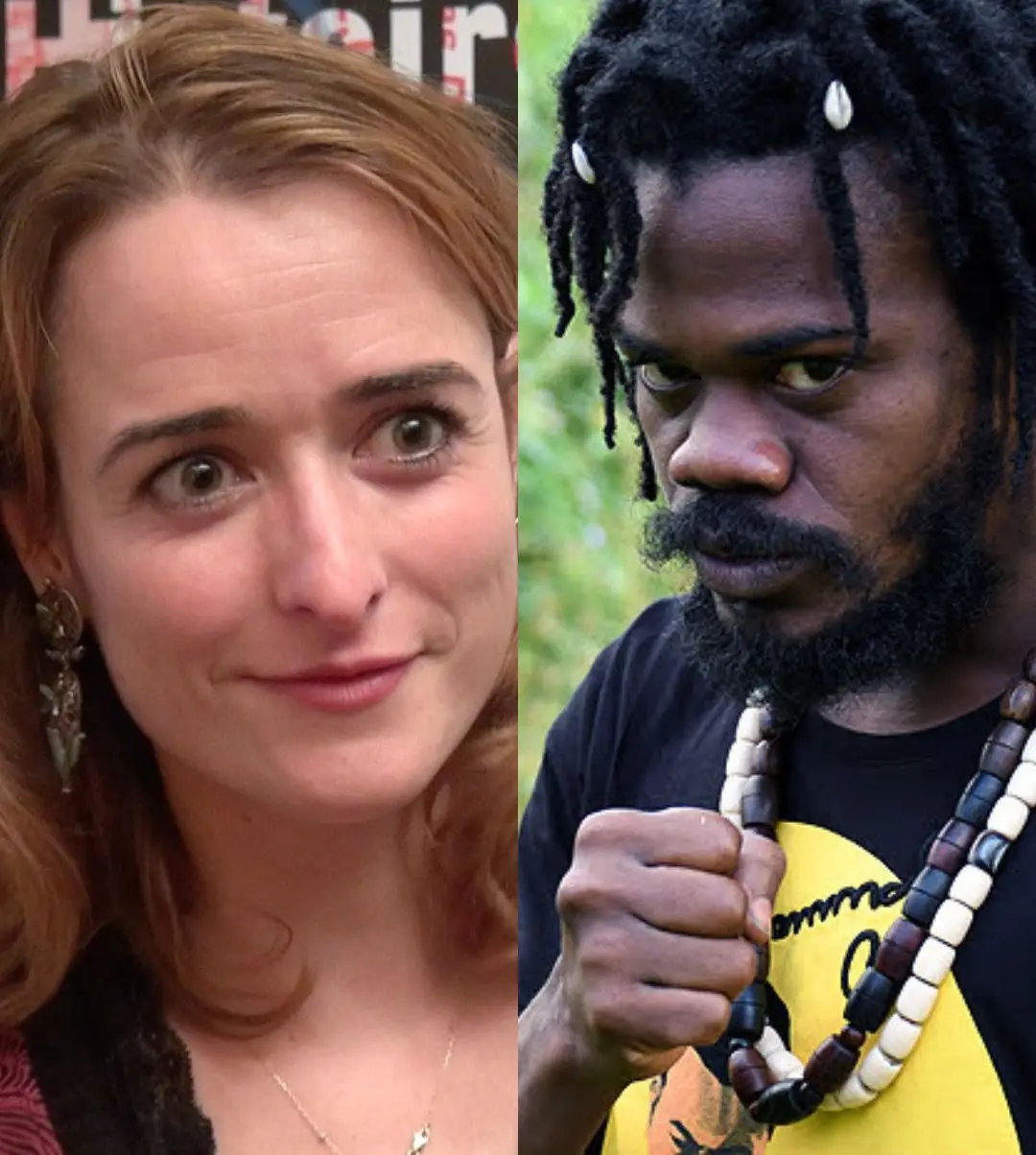
Of Cameroonian origin, founder of the international festival MODAPERF, the space Labo-Modaperf (laboratory of artistic research and manufacture of imaginary futures), and creator of the artistic association the Company Zora Snake, He is the author of several artistic and choreographic works known as: "Transfrontalier", "Je suis", "Au-delà de l'humain", "Le départ", "Les séquelles de la colonisation" ... is one of the most promising artists of the current contemporary scene in Africa. On October 3, he won the Golden Artistic awards, organized by Brukmer magazines in Brussels (Belgium) after being the winner in 2019, he got the first prize, Acogny d’or, for the choreographic competition Africa simply the Best by Bobo Dioulasso (Burkina Faso), visa for creation in 2017. He was in residence for his project « Les masques tombent » of which he was a 2020-2021 winner of the Goethe Institute. He is currently in the new choreographic creation of Serge Aimé Coulibaly entitled "Wakatt" on tour 2022-2023. Zora Snake's real name is TEJEUTSA, which in his traditional language Yemba from western Cameroon means "a person with strong empathy". After his research in dance at the School of Sands (Senegal), the Sony Labou Tansi space (Congo-Brazzaville), the Njara'art space (Madagascar), in Burkina-Faso and his multiple encounters with choreographers of French-speaking Africa, multiple international artistic collaborations, he became the creator of his own projects in Cameroon and internationally. Also coming from the street, from the hip-hop milieu, he is inspired by his territory and his origins. Through a committed dance, poetico-political, accompanied most of the time by texts of very known authors and sometimes extracted from the artist himself, his creations testify of our current most worrying time. A profound work on the quest for self through cultural reappropriation (artistic and ritual practice), Zora Snake lends her body as a place of confrontation to rebound and overcome all North-South divides. The multiple challenges the artist faces within Cameroon, Africa and Europe are the action of creating works and transforming them in public space and inappropriate places to move minds and break the deadly borders and prejudices of our time. Currently at the Royal Opera House of the Palace of Versailles, Zora Snake is expected at the Palais de Tokyo in Paris in December 2021 and at the Camargo Foundation for his first book project. Then also on tour from March to July 2021.
Julie Peghini is an anthropologist and film-maker, lecturer at Paris 8 University and member of CEMTI. She works on the relationship between the arts and politics in Africa and the Indian Ocean (she is the author of the book Ile rêvée, île réelle : le multiculturalisme à l'île Maurice, 2016). From 2018 to 2021, she co-directed with Dominique Malaquais a research-creation project, Yif Menga, on performance in the Africas. Together, they have co-constructed a cycle of events, including the festival Afriques : Utopies performatives at the Cité internationale des Arts ( September 2021). Insurrection du verbe aimer (2019), about the poetry and contemporary legacy of writer Sony Labou Tansi, is her first feature-length documentary. Julie is deputy director of the EUR ArTeC University Research School, a training and research center dedicated to creative work.
Project: L'art est une boxe
Initially self-taught, then trained by leading figures on the African dance scene (Germaine Acogny, Serge Aimé Coulibaly, Salia Sanou), Zora Snake is now recognized as one of the most committed performers in the world. In 2016, in Cameroon, he founded Modaperf, a festival that combines performance, hip hop battles and experimental choreography in an innovative encounter between urban and rural living spaces. This initiative is closely linked to another: the dance company that bears his name, which has led him to collaborate with numerous artists - choreographers, dancers, musicians, writers, directors, actors - in Africa and Europe.
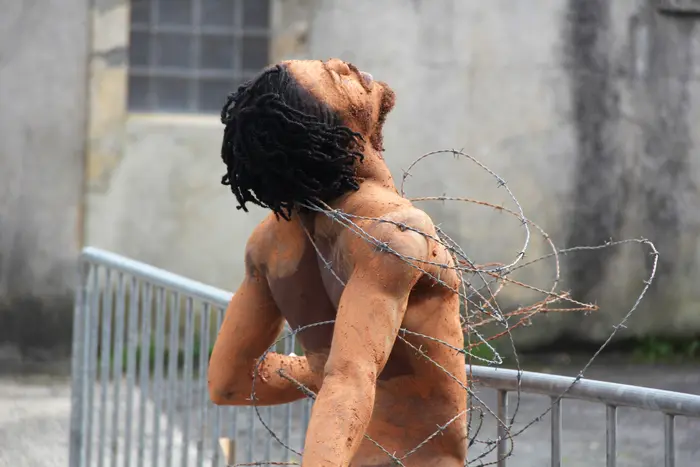
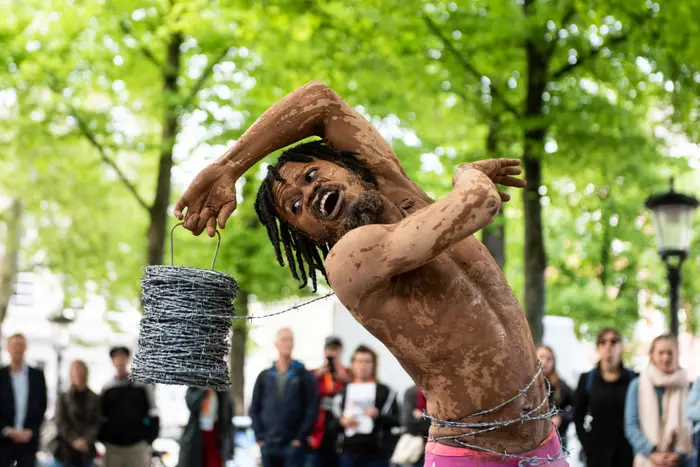
One of Zora Snake's performances is entitled “Transfrontalier”. In it, the artist poses a fundamental question: How can we free ourselves from borders? And, in search of answers, exposes her body in the public space, traversed by the hopes, pains and obstacles that mark the journey of those whom our politicians, often to denigrate them, call “migrants”. Conceived as an artistic investigation, this dance performance questions real and imaginary, geographical and mental borders, both in Europe and Africa. Accompanied by texts read by playwrights and poets, and a soundtrack that plays political speeches on migration, “Transfrontalier”, says Snake, aims to “fight to move minds”.
Moving minds. This is the aim of the project proposed by Zora Snake and Julie Peghini as part of their residency at Camargo. Together, the artist and the researcher hope to lay the foundations for a collective work devoted to Zora Snake's boxing-creation processes.
Their dialogue focuses on performance as a means of creating shared spaces for contestation, reflection and collaboration - spaces that transcend physical and disciplinary boundaries. The title of the book is L'art est une boxe : de la performance, du politique. Through Zora Snake's performance work, the aim is to consider the possibilities of a world free of the barriers that, in this third decade of the third millennium, are accumulating, dividing ever more radically a world we live in less and less in common. A multi-faceted proposition, thework will bring together interviews, essays by researchers, bills and fiction, as well as a substantial body of photography.
While the work “Transfrontalier” will be central to the book, it will not be the only focus. Three key projects - one of which, “Les séquelles de la colonisation” (“The after-effects of colonization”), is itself in three parts - will structure the proposal, all of which have movement as their theme: the movement of bodies, objects and hopes in the present and over the long term. Bodies of “migrants”, as we have seen, but also of slaves, forced laborers and political prisoners; art and ritual objects looted during the colonial era and, since then, subjected to museum immobility, depriving them of strength, possibilities and futures; hopes for freedom (freedom of movement, freedom of speech) hindered but also reappropriated...